Materials & care
Every Julia Bartsch piece is handcrafted in Paris from precious materials chosen for their durability, character and ability to stand the test of time. Rather than creating jewellery for a season, the atelier creates pieces intended to be worn, collected and ultimately passed on to the next generation. This page introduces the materials used throughout the collections and offers guidance on how to care for your jewellery so it can be enjoyed for many years to come.
-
Every Julia Bartsch piece is handcrafted from 925 sterling silver or 18-carat gold. Choosing precious metals has always been a natural part of the atelier. The sculptural carving process behind each piece requires many hours of work and deserves a material that is equally lasting. Unlike brass or other base metals, silver and gold are naturally rare resources valued for their durability, their ability to age beautifully and their capacity to be repaired and cared for over time.
All precious metals used by the atelier are 100% recycled and sourced through suppliers certified by the Responsible Jewellery Council (RJC).
One of the unique qualities of precious metals is their ability to evolve beautifully with time. Surfaces can be professionally polished, refreshed and , if needed, repaired. This allows the jewellery to retain both its beauty and longevity throughout its lifetime.
-
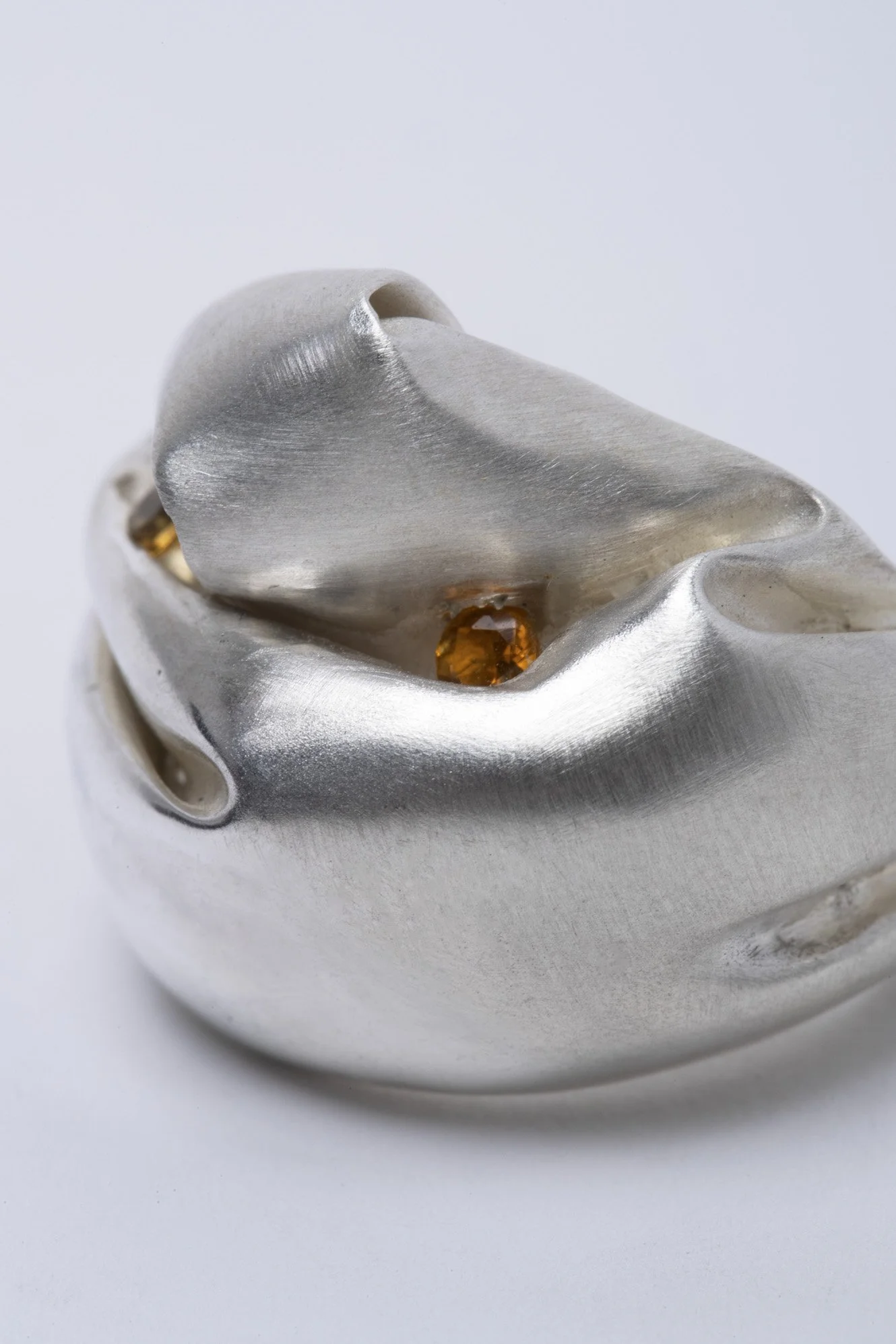
Silver occupies a central place within Julia Bartsch's practice because of its exceptional ability to preserve sculptural detail.
Rather than concealing the character of silver beneath rhodium plating, each piece is left in its natural state, allowing the metal to develop its own gentle patina through wear. These subtle changes are part of the life of the jewellery and can always be refreshed through polishing if desired.
-
Alongside sterling silver, 18-carat gold is an important material within Julia Bartsch's work. Depending on the project, jewellery is made in yellow, white or rose gold and many of the atelier's existing designs can also be produced in gold upon request.
Gold is often chosen for the atelier's bespoke commissions. Its durability and lasting quality make it particularly suited to jewellery intended to be worn every day and kept for generations.
-
Every gemstone is selected individually for its colour, character and relationship to the silver structure in which it is set.
Depending on the project, Julia works with both precious and semi-precious gemstones. For bespoke commissions, both natural and laboratory-grown gemstones can be sourced according to the client's wishes.
Larger coloured gemstones are supplied with individual gemstone certificates where appropriate, depending on the type and size of the stone.
-
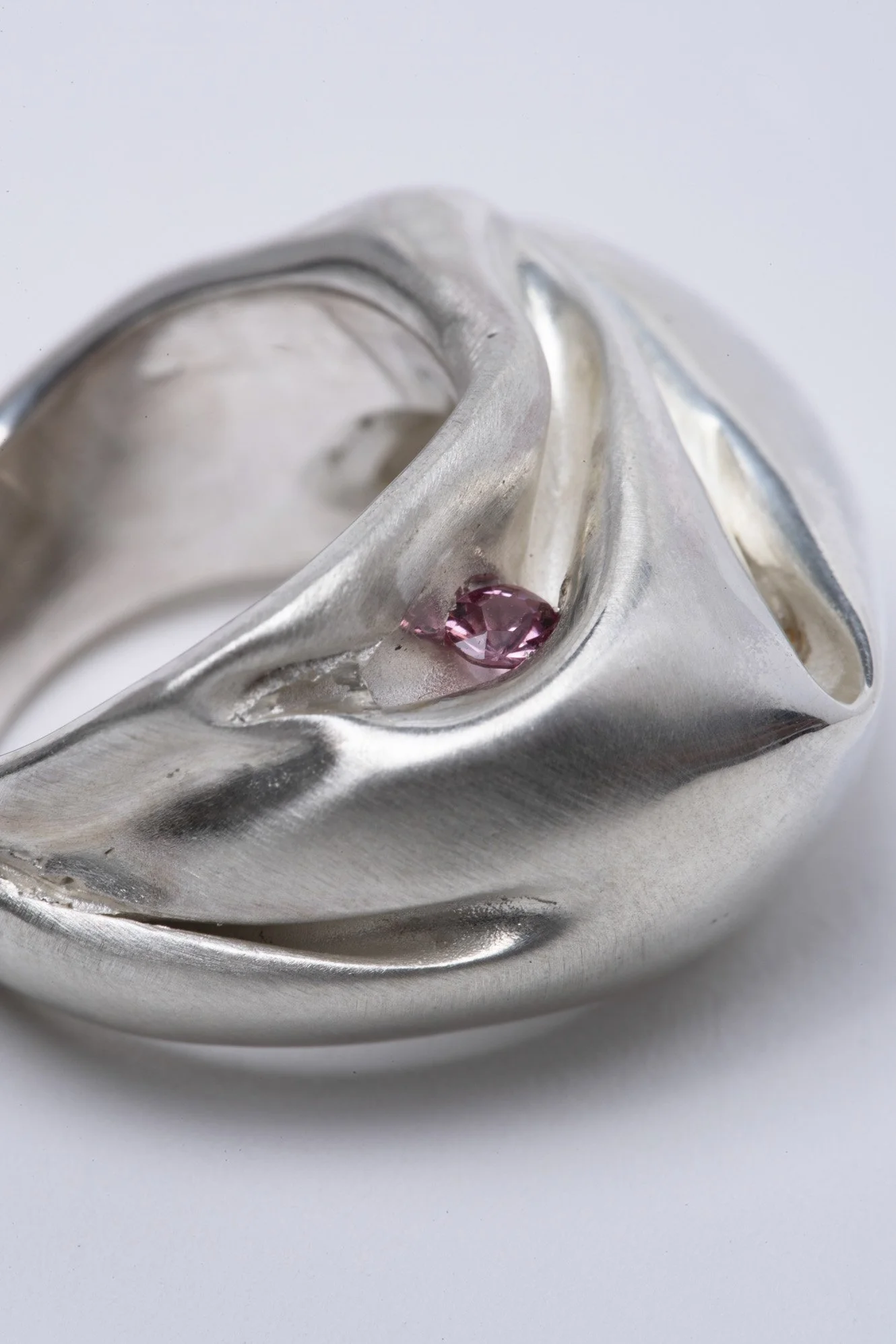
Natural sapphires hold a special place within Julia Bartsch's work and are at the heart of the Sapphire Edition .
Chosen for both their exceptional durability and their individuality, sapphires complement the sculptural nature of the jewellery while introducing colour through a material that is intended to last a lifetime. Each stone has developed naturally over millions of years and carries its own subtle variations in colour, inclusions and character, making every piece unique.
Belonging to the family of the four precious gemstones alongside diamond, ruby and emerald, sapphire is one of the hardest natural materials used in jewellery. Its remarkable resistance makes it particularly well suited to pieces intended to be worn regularly and passed on through generations.
Although often associated with deep royal blue, sapphires occur naturally in a wide spectrum of colours, allowing each stone to bring its own distinct personality to the finished piece.
-
Diamonds are primarily incorporated into Julia Bartsch's bespoke commissions, where each stone is selected in close dialogue with the client. Rather than following a single definition of quality, every project begins with the wishes of its future wearer. For some, this means choosing a larger stone that becomes the centre of the design; for others, exceptional clarity or a particular cut takes priority.
Natural diamonds are the preferred choice, appreciated not only for their beauty and durability but also for their rarity as a finite natural resource. Laboratory-grown diamonds can also be sourced upon request, depending on the project and the client's preferences.
Traditional diamond jewellery is reinterpreted through Julia Bartsch's contemporary sculptural language and innovative stone settings, offering a more modern approach to a material long associated with classical jewellery.
Clients are welcome to participate in the stone selection process by defining a preferred budget, shape, colour or quality. Existing certified diamonds can also be incorporated into bespoke commissions where technically suitable.
Natural diamonds above a certain carat weight are accompanied by an internationally recognised grading certificate, such as GIA, IGI or HRD. As is standard practice within the jewellery industry, smaller diamonds are generally not individually certified.
The availability of certification will always be discussed during the stone selection process, ensuring complete transparency before your commission begins.